In the world of packaging, die cut boxes have become one of the most popular and versatile solutions available. From online retailers sending out products to manufacturers protecting components in transit, these precision-cut boxes offer a combination of strength, efficiency, and presentation quality that standard cardboard boxes simply can’t match.
But what exactly are die cut boxes? How are they made, what are they used for, and what advantages do they offer over traditional packaging? In this article, we’ll explore everything you need to know about die cut boxes, including their benefits, potential drawbacks, and the situations where they really shine.
What Are Die Cut Boxes?
Die cut boxes are custom-shaped cardboard boxes that are cut from flat sheets of corrugated or solid board using a specially designed steel cutting tool called a die. The die is essentially a large stencil made from sharpened blades bent into specific shapes, mounted onto a strong wooden base.
When the board is placed under a die-cutting machine, the die presses down and cuts, creases, and scores the material in a single operation, creating panels, tabs, flaps, and locking mechanisms that fit together perfectly.
Unlike traditional “regular slotted cartons” (RSCs), the standard style of box that’s taped together at the bottom and top, die cut boxes are made to exact dimensions and shapes. This allows for designs with built-in locking tabs, hinged lids, handles, or even display windows.
How Are Die Cut Boxes Made?
The process of making die cut boxes combines engineering precision with creative design. Here’s how it works step by step:
- Design & Specification
The process starts with a packaging designer or engineer creating a die-line, a digital drawing that specifies the box’s size, shape, and layout. This includes cut lines, fold lines, and perforations. - Die Manufacture
The design is then converted into a steel rule die, made by bending strips of sharpened steel into shape and embedding them into a wooden board. Each edge of the die corresponds to a specific part of the box. - Die Cutting
The die is loaded into a flatbed or rotary die-cutting machine, which applies pressure to stamp out the shapes from flat corrugated sheets. During this process, the board is cut and creased in one pass. - Ejection and Finishing
The newly cut box blanks are removed, sometimes including holes, handles, or windows. Some boxes may then be printed, laminated, or varnished for a premium finish. - Flat Packing
The die cut boxes are supplied flat-packed for efficient storage and can be easily assembled without the need for glue or tape.
This precision process allows for repeatable accuracy, so every box comes out identical, ideal for businesses that require consistent branding or snug-fitting packaging.
What Are Die Cut Boxes Used For?
Because die cut boxes can be designed in almost any shape or size, they are used across a wide range of industries and applications. Common uses include:
- E-commerce packaging – for mailing small to medium-sized products safely and attractively.
- Subscription boxes – providing a premium unboxing experience for monthly deliveries.
- Retail packaging – especially for cosmetics, electronics, food, and gift items.
- Postal boxes – sized to meet Royal Mail’s large letter or small parcel dimensions.
- Product display boxes – with built-in windows or printed branding for in-store presentation.
- Component or parts boxes – designed to hold specific items securely during storage or transport.
- Archival or document storage – made to protect flat paper items or documents.
Essentially, if you can imagine a packaging shape, you can make it with a die cut box.
Examples of Die Cut Boxes
-
DC1111 – (283mm x 283mm x 40mm) 11″ x 11″ x 1.6″ Die Cut Corrugated Cartons – FEFCO Style 0427
Price range: £12.50 through £114.50 -
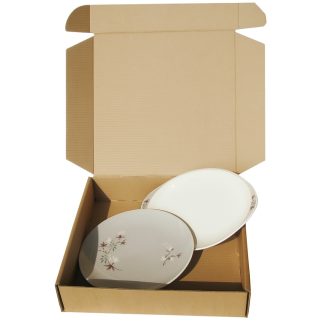
DC14143- (356mm x 356mm x 75mm) 14″ x 14″ x 3″ Die Cut Corrugated Cartons – FEFCO Style 0427 (Plate Boxes)
Price range: £14.75 through £339.49 -
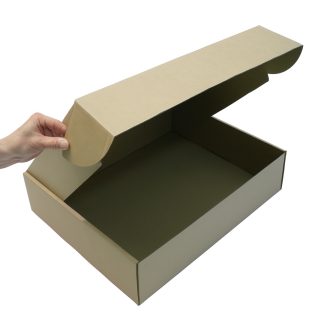
DC21165 – (536mm x 426mm x 126mm) 21″ x 16″ x 5″ Die Cut Corrugated Cartons – FEFCO Style 0427
Price range: £15.96 through £49.78 -
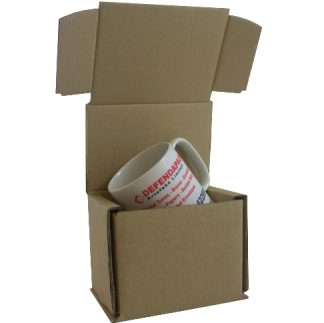
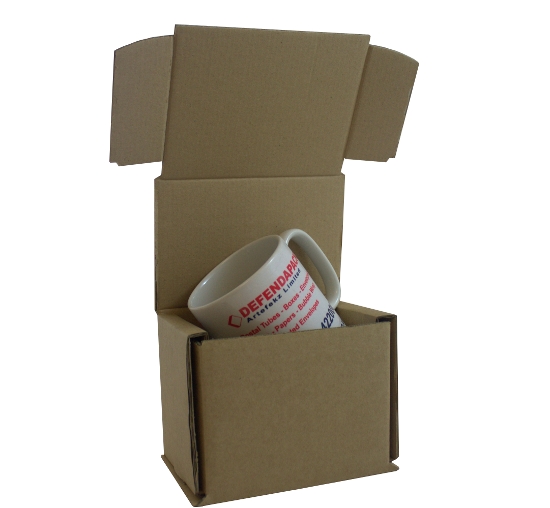
DC433 – (117mm x 85mm x 100mm) 4.6″ x 3.35″ x 3.93″ Die Cut Corrugated Cartons – FEFCO Style 0471 (Mug Boxes)
Price range: £9.65 through £292.79 -
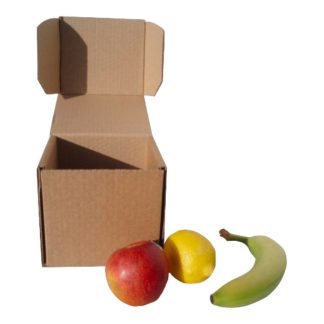
DC555 – (127mm x 127mm x 127mm) 5″ x 5″ x 5″ Die Cut Corrugated Cartons – FEFCO Style 0427
Price range: £11.95 through £112.00 -
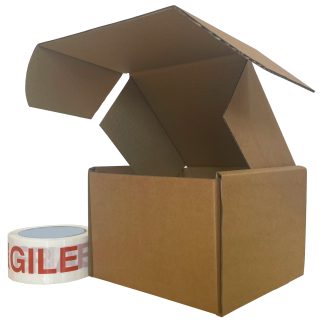
DC665 – (165mm x 165mm x 125mm) 6″ x 6″ x 5″ Die Cut Corrugated Cartons – FEFCO Style 0427
Price range: £10.75 through £396.74 -
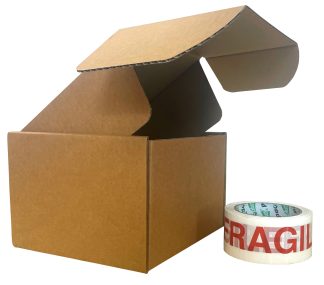
DC775 – (185mm x 185mm x 125mm) 7″ x 7″ x 5″ Die Cut Corrugated Cartons – FEFCO Style 0427
Price range: £10.95 through £149.50 -
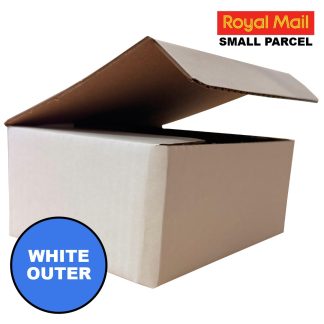
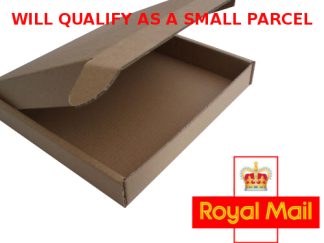
White Royal Mail Small Parcel Size Box – (165mm x 125mm x 70mm) DC642W
Price range: £6.20 through £259.41
Advantages of Die Cut Boxes
There are many reasons why die cut boxes have become a preferred choice for businesses large and small. Let’s look at the key benefits in detail.
1. Precision Fit and Professional Appearance
Because die cut boxes are created to your exact specifications, they offer an exceptional fit for your products. This reduces movement during transit, minimises damage, and enhances the overall presentation. The clean, sharp edges and symmetrical folds make these boxes look professional and high-quality, an important factor for brands that care about presentation.
2. Efficient Assembly
Many die cut designs are self-locking, meaning they can be assembled in seconds without tape or glue. This makes them faster to pack and reduces the need for extra materials, saving both time and money.
3. Customisable Design
Die cut boxes can be fully customised to meet specific needs. You can add cut-out handles, viewing windows, integral dividers, or tabs, whatever your product or shipping method requires. They can also be printed with your company logo, colours, or marketing messages, helping reinforce your brand.
4. Space Saving & Flat Packed
Supplied flat-packed, die cut boxes take up minimal storage space before assembly. This makes them ideal for businesses with limited warehouse or packing area space.
5. Cost-Effective at Scale
While there’s an initial cost for the die itself, once the die is made, boxes can be produced quickly and economically in bulk. For regular packaging users, this provides a reliable and cost-efficient long-term solution.
6. Compatibility with Postal Services
Many die cut postal boxes are engineered to fit within Royal Mail size guidelines, helping you save on postage costs. For online retailers, this can make a big difference to profitability.
7. Eco-Friendly Packaging
Die cut boxes are typically made from recyclable corrugated cardboard, and because they often don’t require plastic tape or fillers, they are an environmentally friendly option.
Disadvantages of Die Cut Boxes
While die cut boxes offer many advantages, there are also a few potential drawbacks to consider before choosing them.
1. Initial Tooling Cost
Because each design requires a custom-made die, there is an upfront tooling cost. This makes die cut boxes less economical for very small production runs or one-off orders. However, for repeat orders, the die can be reused indefinitely.
2. Limited Size Flexibility Once Cut
Once the die is made, it can only produce boxes of that exact size and shape. If your product dimensions change frequently, you may need to invest in new dies.
3. Lead Time for Custom Designs
Creating and testing a new die-cut design can take a few days or weeks depending on complexity. Standard boxes, by contrast, can often be delivered immediately from stock.
Despite these considerations, for most businesses, the efficiency, quality, and presentation benefits far outweigh the minor limitations.
When Are Die Cut Boxes the Best Choice?
Die cut boxes are the ideal solution when your packaging needs to do more than just hold something in place. They excel in situations where fit, function, and finish all matter.
You should consider die cut boxes when:
- You want to improve the presentation of your product for retail or e-commerce.
- You need custom sizes or shapes that standard boxes don’t offer.
- You’re sending products that require a snug, protective fit.
- You want to reduce packing time with self-locking designs.
- You’re looking for eco-friendly and recyclable packaging options.
- You regularly send items via Royal Mail or couriers where size-based pricing applies.
In short, die cut boxes are best used when packaging is part of your brand experience or when protecting the integrity of your product is critical.
Comparing Die Cut Boxes with Standard Cardboard Boxes
| Feature | Die Cut Boxes | Standard Boxes (RSC) |
|---|---|---|
| Fit | Custom made to product dimensions | Fixed, standard sizes only |
| Assembly | Self-locking; no tape or glue needed | Requires taping top and bottom |
| Appearance | Clean, professional finish | Plain, functional look |
| Cost (Setup) | Higher initial tooling cost | No setup cost |
| Cost (Bulk) | Lower per unit in high volumes | Usually higher in long term |
| Storage | Supplied flat-packed | Supplied flat-packed |
| Recyclable | Yes | Yes |